For years, I assumed my bad sleep nights were random — a stressful day, a late dinner, too much scrolling.
But when I finally tracked my sleep every single day of my cycle, a pattern jumped out so clearly, I couldn’t unsee it. My sleep wasn’t random at all. It was hormonal.

In this post, I’m sharing the exact sleep hours I logged across my cycle, how my real‑life pattern compares to the “ideal” sleep curve you see online, and the simple nightly ritual that helped me soften the worst dips.
My data tells a very different story than the generic charts — and it might help you understand your own nights a little better.
What we Know so Far – From Other Resources
Follicular Phase (Days 1–14) — Sleep Foundation
The Sleep Foundation notes that many women experience more stable, deeper sleep during the follicular phase, when estrogen gradually rises. Estrogen supports more consistent mood and body temperature regulation, which can make falling and staying asleep easier in this part of the cycle.
Ovulation (Mid‑cycle) — American Academy of Sleep Medicine
Around ovulation, the American Academy of Sleep Medicine reports that sleep may become slightly lighter as progesterone begins to rise. This hormone increases core body temperature, which can make it a bit harder to fall asleep or stay asleep through the night.
Luteal Phase (Days 15–28) — Journal of Clinical Sleep Medicine
Research in the Journal of Clinical Sleep Medicine shows that the late luteal phase is when sleep disturbances peak. As progesterone drops sharply before menstruation, many women experience shorter sleep duration, more awakenings, and lower sleep quality. This is the phase most associated with PMS‑related insomnia symptoms.
My Observation from Own Data
Researches show that cycle days 1-14 are usually good sleep days due to rising estrogen, however menstrual days (1-5) sleep is not a sound sleep due to cramps and flow. Menstrual cycle days 15-28 when Progesterone rises, sleep issues occur.
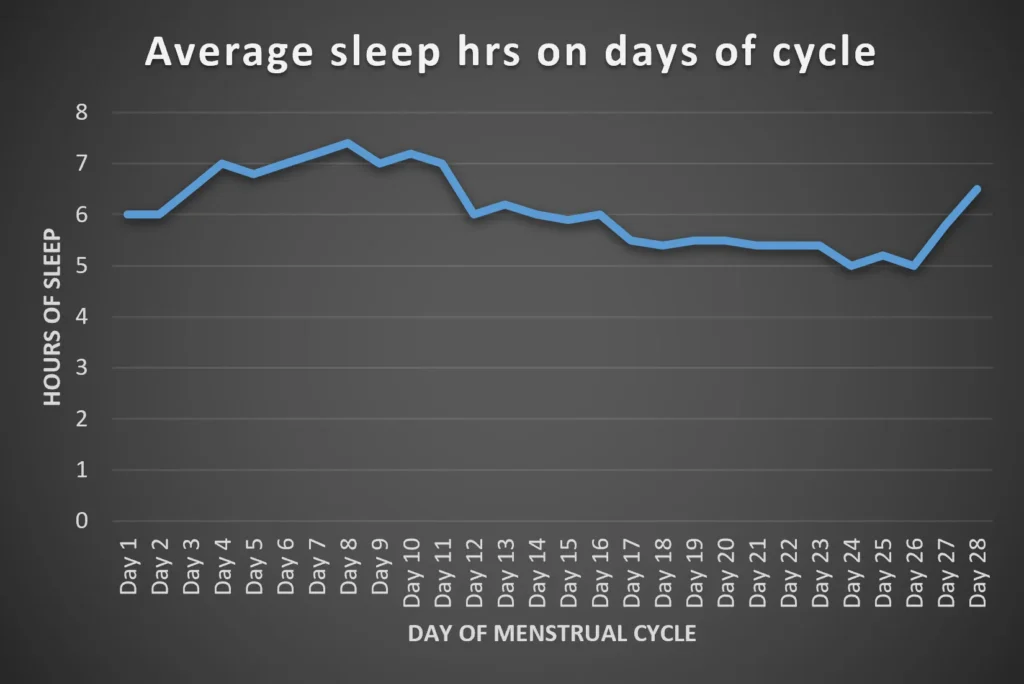
My analysis is somewhat similar, yet different.
- From data, I found sleep improves a day or two prior to onset of period – around at day 26 or 27 (considering 28-day cycle).
- Sleep start to get less sound and intermittent around day 12 or 13, few days prior to ovulation.
- Even with cramps and uncomfortable position of sleeping, sleep quality is good in period days (1-5).
How to Improve Sleep in each Phase of Menstrual Cycle
Follicular Phase –Days 1-14:
Sleep tends to be more stable here, so this is the best time to build consistency.
- Keep a steady bedtime and wake time to “lock in” your natural rhythm.
- Keep caffeine earlier in the day to maintain the good sleep window.
- This phase is naturally supportive — small habits go a long way.
- Start your morning with two glasses of warm water.
- Drink warm tea with your favorite spice that is warm in nature – like cinnamon, ginger, clove.
- Add on citrus, mango, apple and berries.
- Prefer warm lunch & dinner.
- If you are still feeling heavy or sluggish, try some of these Kapha pacifying food and rituals.
Ovulation — Days 14-15:
Progesterone begins rising and body temperature increases, which can make sleep feel lighter.
- Lower your bedroom temperature slightly at night.
- Take a warm shower before bed to trigger a cooling drop afterward.
- Avoid heavy meals late in the evening to reduce restlessness.
These tiny adjustments help counter the temperature shift.
Luteal Phase — Days 16-28:
This is where sleep disturbances peak for many women. This is the phase where supportive rituals make the biggest difference.
- Start your day with two glasses of room temperature water.
- Drink calming tea or tea with cooling spices like – chamomile, spearmint, cardamom.
- Add fruits like melon, peach, grapes.
- Prioritize magnesium‑rich foods (almonds, pumpkin seeds, leafy greens).
- Focus on cooling vegetables.
- Drink cardamom milk or warm milk with dash of saffron and honey before bedtime.
- If you are feeling anxious, mood swings or hot in general – try this Pitta pacifying foods and rituals.
- Reduce screen exposure 1 hour before bed to help melatonin rise.
- Keep your room extra cool — this phase is the warmest hormonally.
Tips to Support Sleep Through Your Cycle
- Keep your room cool, especially around ovulation and the late luteal phase when body temperature naturally rises.
- Create a 10‑minute wind‑down ritual — light stretching, warm shower, or journaling — to calm the nervous system before bed.
- Limit screens 1 hour before sleep to help melatonin rise naturally.
- Add magnesium‑rich foods (almonds, pumpkin seeds, leafy greens) during the luteal phase to support relaxation.
- Anchor your mornings with sunlight or a short walk to stabilize your circadian rhythm across the whole cycle.
Q&A
Q: Why does my sleep get worse right before my period? A: The sharp drop in progesterone in the late luteal phase can cause lighter sleep, more awakenings, and shorter total sleep time. This is the most common window for PMS‑related sleep changes.
Q: Why does ovulation make me feel restless at night? A: Progesterone increases body temperature slightly after ovulation, which can make falling asleep harder and sleep feel lighter.
Q: Should I track my sleep every cycle? A: Tracking even one full cycle can reveal patterns you never noticed. Your personal data often tells a clearer story than generic charts online.
Takeaway
🌿Your menstrual cycle quietly shapes your sleep more than most people realize.
🌿When you map your sleep hours across each phase — like I did — the pattern becomes clear: deeper sleep in the follicular phase, lighter nights around ovulation, and the biggest dips right before your period.
🌿Understanding this rhythm helps you support your body instead of fighting it.
🌿A few small rituals, done consistently, can soften the rough nights and make your whole cycle feel steadier.
🌿 If you want to understand your own sleep‑cycle pattern, start by tracking your nights for just one cycle.
You might be surprised by what your data reveals.
And if you want more cycle‑based wellness tips, rituals, and charts, explore the Brioveda guides — they’re designed to help you work with your body, not against it.