
I used to pride myself on my planning skills. In fact, I used to openly brag to my team about how well I managed my calendar.
What I didn’t realize was how quietly a major hormonal shift—and the brutal perimenopausal fatigue that came with it—was waiting to ruin my perfect routines.

Suddenly, I found myself dragging through the same tasks for hours whenever brain fog hit, taking forever to finish projects I used to breeze through in minutes.
When I sat down to review my schedule, I realized nothing had changed on paper. I had the exact same tools and the same supportive team. Yet, I was completely stressed out.
Why the Clock Failed Me (And My Internal Shift)
That’s when the truth hit me: my old way of planning wasn’t working anymore. It was time to reconsider everything.
I started logging my daily energy levels and tracking my brain-fog days. Before long, a clear pattern emerged.
On specific days of the month, my physical energy completely bottomed out. On other days, the mental fog was overwhelming.
To show you exactly what this looked like, here is a quick snapshot of my tracking data. It shows average workout minutes per day of menstrual cycle.
The Rhythm of My Hormonal Clock
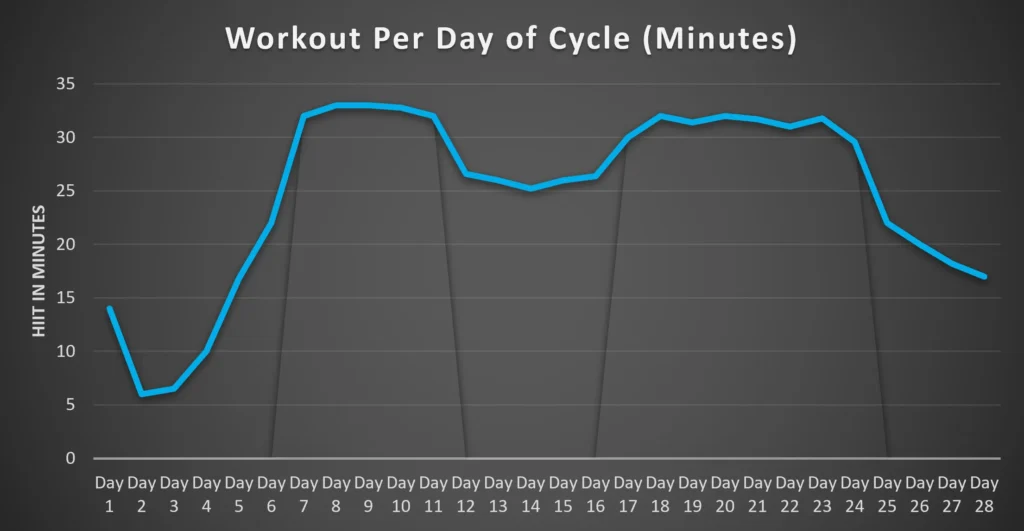
You can see how my physical energy takes a sharp dive during my low-battery days. I ended up skipping HIIT on those days.
- According to my logs, my energy peaks right before mid-cycle and during the final week before my period.
- My energy gets a bit sluggish mid-cycle.
- However, the days right before my period—and the first six days of my cycle—brought heavy episodes of fatigue.
- To make matters worse, PMS began disrupting my sleep, which only added to my low physical energy.
- But I noticed a strange, fascinating twist: my brain fog completely vanished during those exact same low-energy days.
In other words, even when my body felt like lead, my mind was running at top speed. I guess my internal biological clock just works a bit differently.
Once I understood this rhythm, I shifted my schedule to match my biology.
I finally learned how to maximize my output without the crushing stress.
7 Energy Management Tactics That Changed Everything
Here are the seven lifestyle habits, food swaps, and energy management tactics that changed everything for me.
1. Capitalizing on the Morning Sun
- As a natural morning person, I started going to bed earlier and waking up with the summer sun.
- This simple shift gifted me an extra quiet hour in the morning when both my body and mind feel deeply rested.
2. Channeling Fatigue into Creativity
- On my physically exhausted days, I make full use of my sharp, alert brain.
- I dedicate this time to deep creative work, like drafting this blog post or sketching out future content plans.
- I also use these days for studying, preparing training files for my team, reviewing legal terms, and clearing out pending approvals.
3. Saving Physical Work for High-Energy Days
- When my physical energy surges, I tackle demanding tasks.
- This is when I schedule heavy workouts like HIIT, yard work, deep cleaning, or commuting to alternative office locations.
- I simply look at the plans I’ve pre-made on my creative days and execute them.
4. Protecting a Daily “Analog Hour”
- I built a strict, mid-day break entirely free from digital screens.
- By starting my workday just 30 minutes early, I can take a full one-hour lunch break.
- I spend 35 minutes walking outside and eating at a local café or outdoors with friends—never at my desk.
- This disconnect resets my mind and helps me focus through my usual afternoon slump.
5. Shifting from Timelines to Task Sequences
- I completely abandoned strict, time-based scheduling.
- Instead of blocking out rigid hours like “work from 7:00 to 8:00,” I map tasks based on energy.
- My to-do list now reads like a sequence: “Finish this heavy creative task first thing in the morning, then move to this easier task afterward.”
6. Outsourcing Deadlines to Tech
- I leaned heavily into the automated planning features of my favorite apps.
- I let technology track my urgent deadlines and send me reminders, taking the mental pressure off my brain so I don’t have to constantly worry about what is due next.
7. Swapping My Food to Fight Fatigue
- I completely changed my diet on low-energy days.
- By swapping out heavy, sluggish meals for nutrient-dense foods designed to sustain energy, I managed to minimize my physical fatigue significantly.
The moment I replaced rigid time management with flexible energy management, I finally felt like myself again.
It wasn’t just about rearranging my schedule—the combination of intentional habit changes and smart food swaps is what truly helped me sustain these life-changing gains.
Quick Summary: Do’s and Don’ts for Energy Management
| What to DO ☀️ | What to AVOID ❌ |
| Do sequence tasks by energy levels (e.g., “Do this creative work first thing in the morning”). | Don’t force rigid time blocks on your calendar (e.g., “I must write from exactly 7:00 to 8:00 AM”). |
| Do use low-energy, heavy fatigue days for quiet, creative work if your brain is alert. | Don’t waste your peak physical energy days sitting at a desk doing mindless admin tasks. |
| Do take a full, one-hour “analog break” outdoors to disconnect your brain from screens. | Don’t eat your lunch at your desk while scrolling through emails or social media. |
| Do let app notifications and tech tools handle your deadline tracking and reminders. | Don’t try to hold all your urgent deadlines in your head when experiencing brain fog. |
| Do swap your meals on fatigue days to include nutrient-dense foods that boost stamina. | Don’t stick to heavy foods that make your physical fatigue feel even worse. |
Listen to Your Body, Not the Clock
Learning to manage my energy instead of just my time completely changed how I look at productivity.
It gave me permission to be human during a time when my body was changing so rapidly.
If you are struggling with perimenopausal fatigue or unpredictable brain fog, please stop beating yourself up for not sticking to a rigid schedule.
Your body is telling you what it needs—you just have to learn to listen.
By tracking your patterns and shifting your tasks to match your internal clock, you can regain control of your days without sacrificing your peace of mind.
What about you?
Have you noticed your energy patterns shifting lately?
What is one small change you can make today to honor your body’s natural rhythm?
Let me know in the comments below—I would love to hear your story!