When the Floodgate Opens: Why Heavy Meals Don’t Show Up Right Away
You go to an event dinner, enjoy every bite, come home full, and step on the scale the next morning expecting damage. But nothing has changed. You feel relieved — almost surprised — as if the meal “didn’t count.”
But heavy meals don’t show up overnight. They work more like a floodgate: the moment it opens, the water doesn’t spill over immediately. It fills the basin first — quietly, steadily, out of sight. Only later does the overflow appear.
Event meals do the same thing. The first “basin” they fill isn’t fat tissue — it’s your energy, your natural cues, and your craving signals. The next day brings the crash. The day after brings the sugar pull.
📊 Why Heavy Meals Show Up Days Later
Heavy meal does not add fat tissues or weight overnight.
It is the energy crash on following days that gives you natural cues to eat more.
That extra food and sluggishness adds on to water retention and fat – indirect caueses of the weight gain.
This 48 hours reset eases energy crash, minimize overeating and brings your old eating habits back.
And by day three or four, the overeating begins — that’s when the overflow finally shows up.
This post explains that hidden delay — and how a gentle 2 Day Reset helps you un stack the heaviness before it spills over.
- When the Floodgate Opens: Why Heavy Meals Don’t Show Up Right Away
- Why Festive Meals Feel Heavier Than Home Food
- The Stacking Effect: When Heaviness Adds Up Fast
- Eat More vs Taste Only: A Simple Festive Plate Guide
- Q&A
- Q: Why do festive or event dinners feel heavier than home‑cooked meals?
- Q: Is it okay to enjoy heavy foods during celebrations?
- Q: What’s the biggest mistake people make at event dinners?
- Q: How do I know if I need a reset the next day?
- Q: Will a 2‑day reset make me feel deprived?
- Q: Can I do this reset after any heavy meal, not just festive dinners?
- Q: Should I avoid sugar completely during the reset?
- The 2‑Day Festive Reset: How to Un‑Stack the Heaviness
Why Festive Meals Feel Heavier Than Home Food
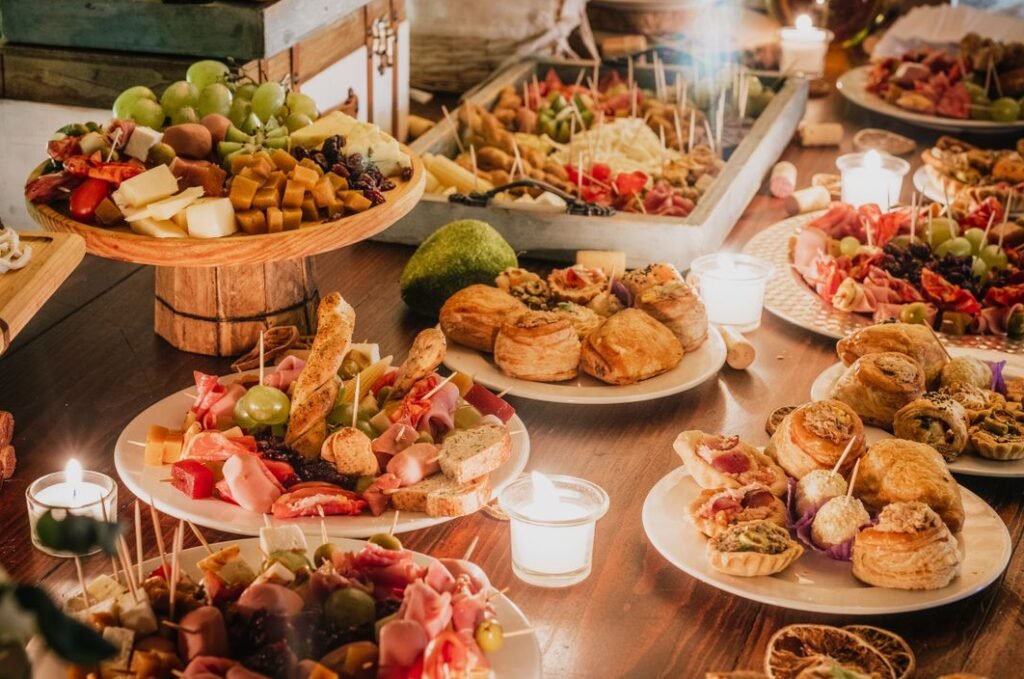
Event dinners in North America often feel heavy because the dishes are built for flavor impact — crispy textures, creamy finishes, glossy sauces, and rich toppings.
To achieve that, chefs rely on extra butter, cheese, white flour, sugar, and oil.
When several of these dishes stack together on one plate, digestion slows and the “post event heaviness” shows up. This simple table helps you choose what to eat more of and what to taste only or limit during festive meals.
The Stacking Effect: When Heaviness Adds Up Fast
Most event meals don’t feel heavy because of portion size or they are made different – they feel heavy because they are all together like – heaviness stacks.
Event dinners often consist fried starters, creamy mains, cheesy sides, sugary desserts and flour-based breads in one meal.
How Heavy Foods Confuse Your Natural Cues
Each dish on its own is not that bad, but together they create a stacked load – that slows digestion and blurs your natural cues.
Thirst starts to feel like hunger, fullness feels like cravings, and tiredness feels like a sugar-crash.
The 2-day after event reset works because it gently un-stacks this heaviness and helps your natural cues come back online.
Eat More vs Taste Only: A Simple Festive Plate Guide
Festive dinners feel heavy not because the food is “bad,” but because the mix is dense — too many rich, creamy, fried, or stacked dishes eaten close together. A gentle reset starts by noticing which foods are naturally heavier to digest and which ones feel lighter on the stomach. Use this simple table to guide your “eat more” vs “taste only/limit” choices during events.
| Category | Heavier to Digest (Taste Only / Limit) | Lighter Options (Eat More) |
| Starters | Mozzarella sticks, spinach‑artichoke dip, loaded nachos, fried wings | Veggie trays with hummus, broth‑based soups, shrimp cocktail, simple salads |
| Main Dishes | Creamy pasta (Alfredo, carbonara), pot roast with gravy, fried chicken, lasagna | Grilled chicken or fish, roasted turkey, baked salmon, sautéed veggies |
| Holiday Classics | Stuffing with butter, mashed potatoes with cream, green bean casserole, candied yams | Roasted vegetables, baked sweet potatoes, simple turkey slices, cranberry relish |
| Carbs | Garlic bread, dinner rolls with butter, mac & cheese, deep‑fried sides | Brown rice, quinoa, baked potatoes, whole‑grain rolls (lightly buttered) |
| Sides | Heavy gravies, cheesy casseroles, creamy coleslaw | Fresh slaw, steamed veggies, lemon‑based dressings, light vinaigrettes |
| Desserts | Cheesecake, pecan pie, pumpkin pie with whipped cream, brownies | Fruit salads, baked apples, small portions of traditional desserts |
| Drinks | Eggnog, creamy cocktails, soda, sweet punches | Water, sparkling water, herbal teas, light mocktails |
Q&A
Q: Why do festive or event dinners feel heavier than home‑cooked meals?
Event meals are built for taste and presentation. Chefs use extra butter for crispiness, more oil for shine, white flour for texture, cheese for richness, and cream for smoothness. These ingredients make dishes delicious but also denser and slower to digest, especially when several rich foods are eaten together.
Q: Is it okay to enjoy heavy foods during celebrations?
Yes — the goal isn’t restriction. It’s balance. Choose one or two rich dishes you truly love and savor them slowly. Fill the rest of your plate with lighter options so your stomach stays comfortable and your next‑day reset feels easier.
Q: What’s the biggest mistake people make at event dinners?
Stacking too many heavy foods in one meal — fried appetizers + creamy mains + sugary desserts + sweet drinks. Even if each portion is small, the combined heaviness slows digestion and creates next‑day sluggishness.
Q: How do I know if I need a reset the next day?
If you wake up feeling bloated, sluggish, puffy, thirsty, or unusually hungry/craving sugar, your body is simply asking for lighter foods + hydration to rebalance. A short reset helps you feel comfortable again without dieting.
Q: Will a 2‑day reset make me feel deprived?
No — this reset focuses on comfort foods, hydration, simple meals, and gentle habits. It’s not a cleanse or detox. It’s a way to help your digestion settle and your energy feel steady again.
Q: Can I do this reset after any heavy meal, not just festive dinners?
Absolutely. It works after restaurant meals, travel days, weddings, potlucks, or any time you feel “stacked” from rich foods.
Q: Should I avoid sugar completely during the reset?
No — just shift to lighter, natural sweetness (fruit, dates, warm spiced drinks) instead of heavy desserts or syrups. This helps cravings settle without feeling restricted.
The 2‑Day Festive Reset: How to Un‑Stack the Heaviness
Heavy meals don’t need punishment — they need un‑stacking. Once the floodgate opens and the “basin” fills with energy crashes, blurred natural cues, and sugar‑pulls, your body simply needs two calm days to settle.
The 2‑Day Festive Reset is designed to gently clear the stacked load from event dinners so your natural cues can come back online.
Day 1 focuses on light foods and hydration to release the heaviness. Day 2 restores rhythm, steadiness, and comfort so you don’t slip into the 3–7 day cycle of overeating that usually follows festive meals.
It’s a simple reset that helps you feel like yourself again — without dieting, restriction, or guilt.