How is sugar blended in our diet?
We all love a little sweetness in life—whether it’s that morning pastry, a slice of cake at a celebration, or even the sugar hiding in our “healthy” granola bars. But here’s the truth: sugar can be sneaky.
It makes things taste delightful, yet too much of it slowly chips away at our wellness. Let’s talk about how sugar affects us, how to cut back without feeling deprived, and what healthier alternatives look like.
We take any diet; without a sweet dish, it is incomplete. Especially the Indian diet, it has more options in dessert than in the main course meal. Any festival is incomplete without a dessert; every festival has a special dessert for.
How Sugar Affects Health?
Sugar isn’t inherently evil—it’s energy. Our body needs it in a certain amount; as we age, our energy-consuming capability—metabolism—declines, and so does our energy need.
If we consume per our body’s needs, considering our age, health issues, and work type, it does not hurt. But when we consume it in excess, it can:
- Spike blood sugar and insulin, leading to energy crashes.
- Contribute to weight gain and belly fat.
- Increase risk of type 2 diabetes and heart disease.
- Harm dental health (hello cavities).
- Accelerate skin aging and inflammation.
Think of sugar like a guest at a party: fun in small doses, but if it overstays its welcome, things get messy.
How to Cut Sugar Without Feeling Miserable?
Cutting sugar doesn’t mean cutting joy. You do not need to terminate sugar entirely overnight; every step counts. Try these gentle swaps:
- Replace soda with sparkling water + lemon or mint.
- Choose whole fruit instead of fruit juice.
- Shrink dessert portions instead of eliminating them.
- Read labels—sugar hides in sauces, breads, and “low-fat” snacks.
Small changes add up, and your taste buds will adjust faster than you think.
Daily Sugar Needs for Adults
According to the World Health Organization, adults should keep “free sugars” (added sugars + those in juices, syrups, etc.) below 10% of daily calories. For a 2,000-calorie diet, that’s about 48 grams (12 teaspoons). Even better? Aim for 25 grams (6 teaspoons) for extra health benefits.
Surprising Examples of Sugar
Many everyday foods and drinks that don’t taste overly sweet can actually be packed with hidden sugar.
Savory Foods with Hidden Sugar
- Pasta sauces—A half-cup serving can contain 6–12 grams of sugar, similar to a cookie.
- Ketchup and condiments—Just a few tablespoons can add up quickly.
- Salad dressings—especially “low-fat” versions, which often add sugar for flavor.
- Bread and wraps—Some varieties sneak in sugar for texture and taste.
“Healthy” Foods That Aren’t So Innocent
- Granola and granola bars—Often marketed as wholesome but can carry 8–12 grams of sugar per serving.
- Flavored yogurt—A single cup may contain more sugar than a dessert.
- Instant oatmeal packets—Sweetened versions can rival sugary cereals.
- Dried fruit—Naturally sweet, but often coated with added sugar.
Drinks That Surprise Us
- Fruit juices—Even 100% juice can deliver as much sugar as soda.
- Sports drinks—Marketed for hydration but often loaded with added sugar.
- Flavored coffees and teas—Syrups and creamers can push sugar content sky-high.
- Smoothies—Depending on ingredients, they can rival milkshakes in sugar density.
Snack & Convenience Foods
- Breakfast cereals—Many “whole grain” or “kids’” cereals are sugar-heavy.
- Energy bars—Often closer to candy bars in sugar content.
- Canned soups—Tomato-based varieties can have surprising sugar levels.
Sugar hides in places we don’t expect—savory sauces, “healthy” snacks, and drinks that seem innocent. Reading labels and being mindful of portion sizes can help keep intake under control.
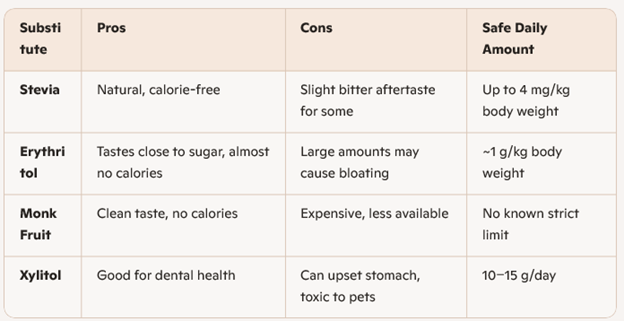
Best Sugar Substitutes (and Safe Amounts)
Here are some popular substitutes and how much is safe:
Mix and Match
Don’t feel stuck with one substitute. You can use stevia in coffee, erythritol in baking, monk fruit in smoothies, and yes—even a little real sugar when you want that authentic taste. Balance is the real secret.
Visible Differences in Mid-Age Adults
When middle-aged adults cut back on sugar, the changes are often noticeable:
- More stable energy throughout the day
- Clearer skin and reduced inflammation
- Easier weight management
- Better sleep quality
- Lower risk of chronic conditions like hypertension and diabetes
- Better metabolism – fat burning
It’s like giving your body a tune-up—it runs smoother, feels lighter, and looks brighter.
Prevention is better than cure!
Closing Thoughts
Sugar isn’t the villain—it’s the overdose that ruins wellness. By keeping intake within safe limits, experimenting with substitutes, and alternating wisely, you can enjoy sweetness without sacrificing health. The payoff? More energy, a better mood, a healthier body, and a glow that makes middle age feel like prime time.
👉 Think of this as a journey, not a punishment. Cutting sugar is less about restriction and more about rediscovering how good real food tastes when it isn’t drowned in sweetness.
Want to cut sugar in your diet and so in your blood? Search Brioveda.com products for ‘The Sugar Reset’ eBook.