
What Is Kapha?
Kapha is the Ayurvedic dosha made of earth and water, known for stability, nourishment, and calm strength. It governs the body’s structure, lubrication, and immunity. When Kapha is balanced, you feel grounded, steady, and emotionally warm.
Why Kapha Becomes Imbalanced
Kapha imbalance often shows up during cold, damp seasons or periods of low activity. Common signs include sluggish digestion, heaviness, congestion, low motivation, and emotional fog. These patterns are especially common in early spring, when Kapha naturally increases.
Or with any respiratory virus infection, congestion & Kapha imbalance is very normal.
Kapha in Daily Life
People with strong Kapha energy tend to be nurturing, patient, and steady. When balanced, Kapha brings emotional resilience and physical strength. When out of balance, it can lead to Kapha heaviness, mucus buildup, slow metabolism, and low energy.
How to Pacify Kapha (Simple & Beginner‑Friendly)
Kapha is pacified through warm, light, and energizing routines.
This includes warming spices, light meals, steady movement, and uplifting daily habits. Small shifts—like warm breakfasts, gentle morning activity, and reducing cold, heavy foods—help reduce Kapha sluggishness and restore clarity.
Kapha feels its best when life is light, active, and gently stimulating.
Whenever your days become slow, heavy, or overly routine, returning to simple energizing practices can help your body and mind feel clearer and more uplifted.
This Kapha‑balancing guide offers steady, beginner‑friendly daily care you can follow anytime you need more movement, warmth, and motivation. It’s designed to be evergreen and supportive through all seasons.
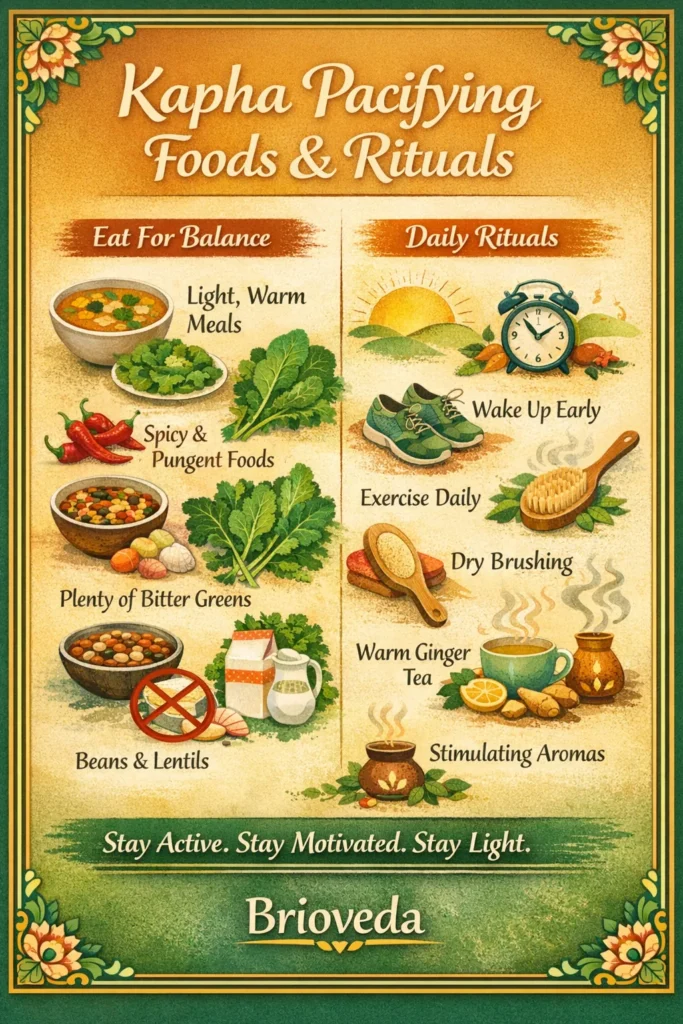
Daily Kapha‑Balancing Care
Morning
- Wake up early, ideally before sunrise, to avoid heaviness.
- Sip warm water with ginger or lemon to gently awaken digestion.
- Choose a warm, lightly spiced breakfast or keep it simple if you’re not hungry.
- Begin the day with movement: brisk walking, energizing yoga, or light cardio.
- Keep mornings active and purposeful — avoid lingering in bed or moving too slowly.
- If using oil before showering, choose warming oils such as sesame or mustard (in small amounts).
Midday
- Eat your largest meal of the day between 12–2 PM.
- Favor warm, light, spiced meals that support digestion and energy.
- Avoid heavy, oily, or overly sweet foods.
- Take a short walk after lunch to maintain circulation and clarity.
- Keep tasks varied and engaging to avoid sluggishness.
Evening
- Eat a light, warm dinner a few hours before bed.
- Choose activities that keep you gently engaged — avoid long periods of inactivity.
- Keep lights bright enough to maintain alertness until bedtime.
- Wind down with light stretching or a warm shower.
- Aim for a consistent bedtime without oversleeping.
Foods to Limit or Avoid (Heavy, Cold, Oily)
- Cold foods and iced drinks
- Heavy dairy (cheese, yogurt, ice cream)
- Fried or oily foods
- Excess sweets or desserts
- Wheat‑heavy meals
- Bananas, melons, or very sweet fruits
- Eating late at night or overeating
- Large portions or second helpings
These foods and habits tend to increase heaviness, sluggishness, and stagnation — qualities that can make Kapha feel weighed down.
What To Eat To Reduce Kapha Heavieness (Warm, Light, Spiced)
- Light grains: barley, millet, quinoa
- Warm, cooked vegetables (especially leafy greens, broccoli, cauliflower)
- Legumes: mung dal, lentils, chickpeas
- Warming spices: ginger, black pepper, cinnamon, mustard seeds, turmeric
- Light fruits: apples, pears, berries, pomegranate
- Herbal teas: ginger, cinnamon, tulsi, clove
- Warm water throughout the day
These foods help bring warmth, lightness, and gentle stimulation — qualities that naturally support Kapha.
Cooking Methods That Support Kapha
- Favor warm, light cooking: sautéing, steaming, roasting with minimal oil.
- Use warming spices generously to support digestion and energy.
- Avoid deep‑frying or heavy, creamy preparations.
- Keep meals warm and freshly cooked whenever possible.
- Add herbs and spices during cooking to enhance lightness and warmth.
These methods help meals feel energizing and easier to digest.
Hydration for Kapha
- Sip warm or hot water throughout the day.
- Avoid iced drinks or cold beverages.
- Choose stimulating herbal teas such as ginger, cinnamon, tulsi, or clove.
- Limit very sweet drinks or fruit juices.
- Drink smaller amounts with meals to avoid heaviness.
Warm, stimulating hydration helps maintain clarity and energy.
Best Timing for Eating (Light, Consistent, Not Heavy)
- Eat meals at regular times each day.
- Breakfast: light and warm; avoid heavy or cold foods.
- Lunch: your largest meal, ideally between 12–2 PM.
- Dinner: warm, light, and eaten early.
- Avoid snacking or emotional eating.
- Keep portions moderate and stop when comfortably full.
A steady eating rhythm helps Kapha stay energized and balanced.
Rest & Sleep (Light, Refreshing, Not Excessive)
- Maintain a consistent sleep schedule without oversleeping.
- Keep the bedroom warm and comfortable but not overly cozy.
- Avoid long naps during the day.
- Choose evening activities that keep you gently engaged.
- Wind down with light stretching or warm herbal tea.
Balanced rest helps Kapha feel refreshed without heaviness.
Energizing Breath & Mindfulness
- Choose warming, stimulating breathing practices such as gentle, steady energizing breaths.
- Avoid slow, cooling breathwork that may increase heaviness.
- Spend a few minutes each day in mindful movement or active awareness.
- Keep mindfulness practices uplifting and lightly stimulating.
These practices help awaken Kapha’s natural energy and clarity.
Gentle Lifestyle Anchors
- Prioritize warmth, movement, and variety in your day.
- Choose uplifting activities: brisk walks, music, social connection, creative hobbies.
- Keep your environment bright, warm, and well‑ventilated.
- Avoid long periods of sitting or inactivity.
- Build small rituals that encourage movement and motivation.
- Surround yourself with energizing colors, scents, and sounds.
These anchors help create the sense of lightness and momentum Kapha needs to feel supported.
How to Use This Guide
This guide is your foundation.
Whenever a Brioveda post mentions Kapha imbalance or Kapha‑related concerns, return to this page for the core practices.
Each problem‑specific post may offer small variations or special tips based on the situation, but this guide remains your steady base — warm, energizing, and supportive anytime you need it.
If this brought you clarity today, feel free to share it with someone who might need it.

