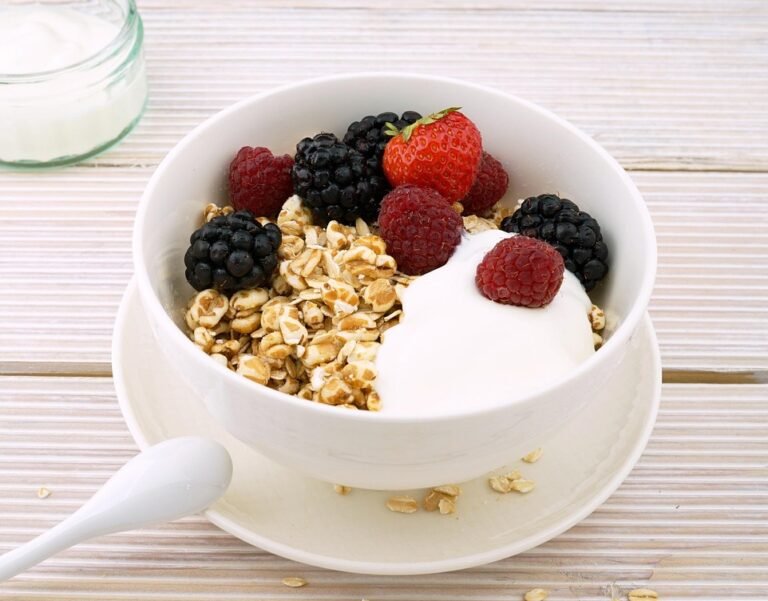
Homemade yogurt isn’t complicated, but it makes a noticeable difference. When you control the ingredients and the process, you get something fresher, lighter, and easier on your gut than most store‑bought versions.
I have been making yogurt since my high school years. However, when I moved to North America, my yogurt recipe did not work.
Due to lower temperature, it was taking too long or did not ferment at all.
My friends were using clothes cover to keep the pot warm. I could not master that trick either.
I started experimenting with the stove-top warmer and oven temperature, and finally came up with the temperature for ‘just right’ yogurt!
Why Yogurt Helps
In Ayurveda, common health issues are treated with lifestyle changes and a food-as-medicine approach. It focuses on what we have in our body – dosha. In balancing dosha, homemade yogurt and buttermilk have a special space in Ayurveda.
It is not that difficult to prepare the yogurt at home. And buttermilk is even easier than that.
Frequently Asked Questions
Q1: Can I make yogurt from buttermilk or how to make yogurt from buttermilk?
Ans: Yes you can make a fresh batch of yogurt from a buttermilk starter. Just use more buttermilk than yogurt recipe calls for.
For example, if recipe calls for one teaspoon of yogurt as a starter, use 2-3 teaspoons of buttermilk instead.
Q2: Why homemade yogurt has more water than store brought ones?
Ans: Homemade yogurt is just milk and starter culture, no other stabilizers are added. Hence, homemade yogurt has more water content than store brought.
Q3: Can add some condensed milk in the place of milk?
Ans: Yes, you can. However quality of the yogurt will be different. It may compromise yogurt’s medicinal properties.
🍶Yogurt (dahi) Recipe
Prep Time: 5 minutes
Fermentation Time: 6–10 hours
Serves: 3–4 cups
Ingredient List
- 4 cups (32 oz) of cows milk (whole milk for thick yogurt)
- 1 teaspoon Greek yogurt or dahi starter (plain, unsweetened)
Instructions
- Warm cow’s milk at medium heat in a thick-bottomed pot until cream in the milk forms a thin layer on top.
- Let it cool up to 100°F.
- Add half a teaspoon of Greek yogurt or dahi (live culture of edible, good bacteria) to the milk and stir gently.
- Warm up the oven for a minute, turn it off, and place that covered milk pot in—for about 6–7 hours.
Notes
- Use a glass or stainless steel container for best results.
- A warmer environment leads to faster setting; cooler rooms take longer.
- Save 1–2 teaspoons of this batch as the starter for next time.
Troubleshooting
- Runny yogurt: Milk wasn’t warm enough, or too little starter.
- Sour yogurt: Fermented too long or kept in a very warm spot.
- Slimy texture: Starter culture was old or flavored
Step-by-step Photo
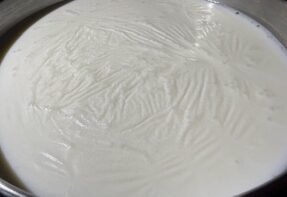
Warmed up milk.
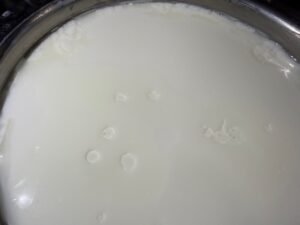
Fermented Yogurt:
Nutrition of Yogurt (dahi)
Nutritions per one serving of 8 oz – (4 servings entire recipe)
Macronutrients
- Calories: ~149
- Total Fat: ~8 g
- Saturated fat: ~5–5.1 g
- Carbohydrates: ~11–11.4 g
- Sugars (naturally occurring lactose): ~11–11.4 g
- Fiber: 0 g
- Protein: ~8.5–9 g
Micronutrients
- Calcium: ~296–300 mg (≈23–30% DV)
- Potassium: ~380 mg (≈8% DV)
- Sodium: ~112–113 mg (≈5% DV)
- Cholesterol: ~32 mg (≈11% DV)
- Vitamin D: ~0.2–0.25 mcg (≈1–2% DV)
- Vitamin A: ~66 mcg (≈7% DV)
- Vitamin C: ~1–1.2 mg (≈1% DV)
- Phosphorus: ~233 mg (≈19% DV)
Benefits
- A balanced mix of protein + healthy fats (grounding for Vata, stabilizing for Pitta).
- Naturally occurring lactose sugars but no added sugars.
- Excellent calcium + potassium for bone and muscle support.
- A gentle, cooling, nourishing food — especially supportive when paired with warming spices (cinnamon, cardamom, ginger) to improve digestibility.
🥛 Buttermilk (Chaas) Recipe
Prep Time: 2 minutes
Serves: 1–2
Ingredient List
- ½ cup homemade yogurt
- 1 cup water
- Pinch of black salt
- Optional: cumin powder, chopped cilantro
Instructions
- Whisk yogurt until smooth.
- Add water and whisk again until frothy.
- Season with salt and optional spices.
- Serve immediately.
Notes
- Adjust water for thicker or thinner buttermilk.
- Best consumed fresh for digestion support.
- Drink very thin buttermilk made from homemade yogurt and water (at room temperature) with rock salt to alleviate Vata.
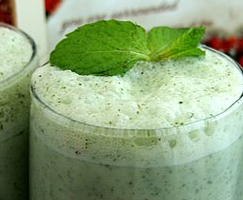
👉 Add a few mint leaves to buttermilk for added benefits.
Brioveda Tips:
👉 Eat more yogurt and buttermilk around lunch, not with lunch.
👉 Just be careful—when you eat yogurt or drink buttermilk, do NOT consume it too cold in winter or if you are using it to balance vata.
👉 If you cannot make homemade yogurt, use Greek yogurt or Dahi.
Storage
You can store yogurt in the fridge, it stays good for about two weeks. Butter milk stays good up to 3 to 4 days in the fridge. Just whisk a little when you use it.
Always keep it covered in fridge, as it absorbs flavors from other food in fridge.
Takeaway
I recommend using homemade yogurt.
Yogurt in the market may have added stabilizers or sugar or any other preservatives.
Only point you have to keep an eye on is milk temperature when you add yogurt to it – it should be around 100F.
If it is too hot, bacterica can not survive. If it is too cool, bacteria can not grow.
Take a step toward healthy eating! See homemade Ghee recipe.
If you need help, please contact.
If this brought you clarity today, feel free to share it with someone who might need it.